Why Choose Colorant Masterbatch for Plastic Manufacturing?

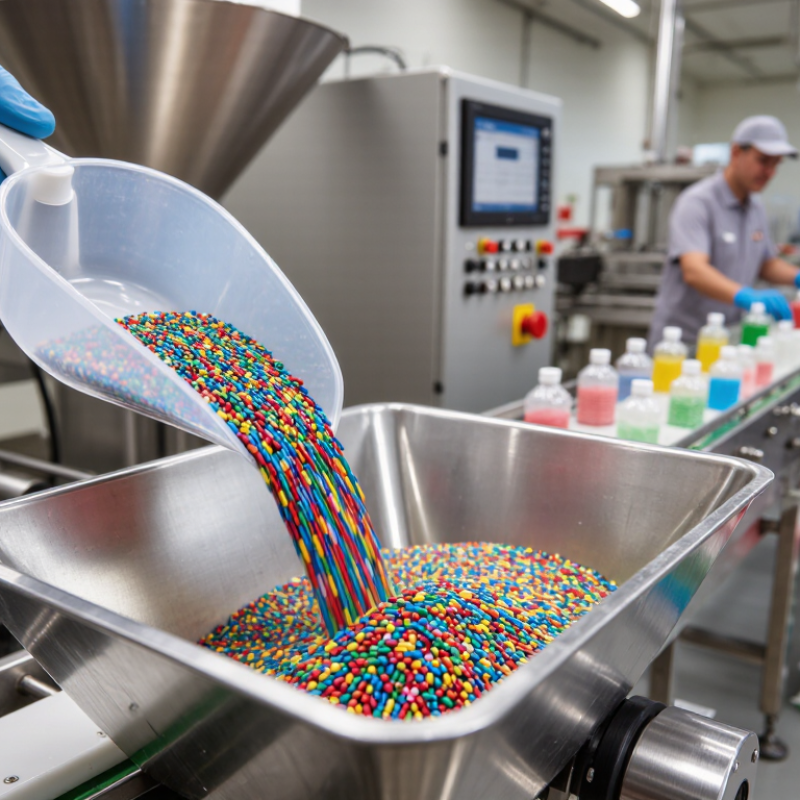
Choosing the right coloring method can influence product quality, production speed, and operating costs. Colorant Masterbatch offers a practical route for coloring plastics with controlled pigment concentration. It contains dispersed pigments within a carrier resin, forming clean, easy-to-handle pellets. Operators can feed these pellets alongside the base polymer. This approach reduces dust and simplifies material handling on busy factory floors.

In real production, consistency matters more than a bright color sample. A well-designed Colorant Masterbatch can support even shade distribution across bottles, films, containers, and molded parts. It may also improve dosing accuracy during extrusion or injection molding. Technicians should still check melt temperature, screw design, residence time, and carrier compatibility. A small mismatch can create streaks, specks, or uneven gloss. Those defects often appear only after several production cycles.

Supplier documentation provides useful evidence. Technical data should explain pigment loading, recommended dosage, heat stability, light resistance, and processing limits. Independent testing can confirm color strength and migration performance for the intended application. However, no masterbatch works perfectly in every polymer system. Trial runs remain essential. Some results may surprise the production team. That is not failure alone; it can reveal weak assumptions in the formulation or process.

Selecting a colorant therefore requires more than comparing price per kilogram. Manufacturers should consider total dosage, waste reduction, cleaning time, and long-term color stability. A reliable supplier will discuss these details openly and support controlled sampling. With disciplined testing and realistic expectations, Colorant Masterbatch can become a dependable part of modern plastic manufacturing.
Why Choose Colorant Masterbatch for Plastic Manufacturing?

What Is Colorant Masterbatch in Plastic Manufacturing?

What Is Colorant Masterbatch in Plastic Manufacturing?

Colorant masterbatch is a concentrated mixture used to color plastic products. It contains pigments or dyes blended into a carrier resin. The carrier should match, or work well with, the base plastic. During manufacturing, operators add measured masterbatch pellets to natural resin. Heat and shear then distribute the color through the melt.

This process is cleaner and more consistent than handling loose pigment powder. It can reduce dust, simplify dosing, and support repeatable color control. Manufacturers use colorant masterbatch in films, packaging, pipes, household parts, and molded components. The final shade depends on dosage, resin type, processing temperature, and pigment performance. A small dosing error can create visible differences, especially in pale colors.

It is not a magic fix, though. Poor dispersion may cause streaks, specks, or uneven gloss. Testing remains essential. Technicians should check color under controlled lighting and compare samples against an approved reference. They should also review heat stability, migration resistance, and compatibility before full production.

Tips: Store pellets in dry, sealed containers. Confirm the recommended let-down ratio. Clean the machine before changing colors. Record batch details and processing settings. Start with a small trial. Mistakes become expensive at scale.

How Colorant Masterbatch Works in Polymer Processing

Colorant masterbatch works by carrying concentrated pigments or dyes inside a compatible polymer resin. During processing, the pellets enter the extruder with natural resin. Heat softens the carrier, while screw shear breaks pigment clusters and distributes color through the melt. The result is more controlled than adding loose powder directly.

Processing conditions matter. A typical let-down ratio may range from 1% to 5%, depending on pigment strength and the required shade. Operators must match the carrier resin with the base polymer. Poor compatibility can create streaks, filter pressure, weak weld lines, or uneven gloss. Melt temperature, screw speed, residence time, and moisture also affect dispersion. Small changes matter.

Color control supports a larger and more demanding plastics sector. PlasticsEurope reported global plastics production of about 413.8 million tonnes in 2023, showing the scale of polymer processing. The OECD Global Plastics Outlook reported 353 million tonnes of plastic waste in 2019, increasing pressure for efficient material use and recyclable formulations. Masterbatch can reduce handling losses and improve dosing accuracy, but it is not magic. Recycled polymers may shift shade between batches. Testing remains necessary. Spectrophotometer readings, production samples, and heat-aging checks provide stronger evidence than visual judgment alone. In practice, the best formulation is not always the most concentrated one. It must also run cleanly, disperse consistently, and preserve the polymer’s intended performance.

Why Choose Colorant Masterbatch for Plastic Manufacturing? - How Colorant Masterbatch Works in Polymer Processing

Typical industry values are shown for comparison. Actual performance depends on the polymer, pigment chemistry, equipment, color target, and processing conditions.
Data Dimension What Colorant Masterbatch Provides How It Works in Polymer Processing Practical Manufacturing Considerations
Definition A concentrated mixture of pigment or dye dispersed in a carrier resin, usually supplied as solid pellets. The pellets are metered into the base polymer and melted during compounding, extrusion, injection molding, blow molding, or film production. The carrier resin should be compatible with the production polymer to support uniform dispersion and minimize processing defects.
Typical Addition Rate Commonly about 1% to 5% by weight for many color applications; some highly concentrated systems require less. Controlled dosing allows the colorant concentration in the final part to be adjusted without handling loose pigment powder. The required let-down ratio should be confirmed through laboratory trials and color matching rather than assumed from the product name alone.
Colorant Concentration Commercial concentrates may contain a high level of pigment or dye, depending on pigment strength, carrier resin, and application requirements. Shear and heat in the screw or melt-mixing zone distribute the concentrate throughout the polymer melt. Higher concentration can reduce storage and handling volume, but excessive loading may affect viscosity, surface appearance, or mechanical properties.
Dispersion Quality Provides pre-dispersed colorant, helping reduce agglomerates and visible specks when correctly formulated and processed. The carrier resin softens and transports the pigment through the melt, while mixing elements break down remaining pigment clusters. Poor dispersion may result from insufficient mixing, incompatible carriers, excessive throughput, moisture, or an unsuitable processing temperature.
Color Consistency Supports repeatable shade control when pellet quality, dosage, resin grade, and processing conditions remain consistent. A metering system feeds a defined quantity of masterbatch into a measured polymer stream. Color quality should be checked using approved color standards and, where required, instrumental measurements such as CIELAB or ΔE.
Processing Temperature Must be suitable for the temperature range of the host polymer and the thermal stability of the colorant. The masterbatch melts or softens with the polymer during the selected processing cycle. Excessive heat or residence time can cause pigment degradation, shade change, polymer discoloration, or volatile formation.
Moisture Management Pelletized masterbatch is generally cleaner and easier to handle than loose powders, although some formulations can still absorb moisture. Moisture may create bubbles, splay, silver streaks, hydrolytic degradation, or surface defects in moisture-sensitive polymers. Store material in sealed packaging and follow the supplier’s drying guidance, especially for hygroscopic polymers such as polyamides and polyesters.
Feeding and Metering Pellets can be dosed using gravimetric or volumetric feeders designed for the material’s flow characteristics. The feeder regulates the masterbatch-to-polymer ratio before the materials enter the melting and mixing zones. Stable pellet size, low dust, and consistent bulk density improve feeding accuracy and reduce housekeeping requirements.
Compatibility Available in carrier systems selected for common polymers such as polyethylene, polypropylene, polystyrene, ABS, and engineering plastics. Compatible polarities and melt-flow behavior help the colorant carrier blend into the host polymer rather than separate from it. Incompatibility can cause streaks, plate-out, poor surface gloss, reduced weld-line strength, or uneven color.
Production Efficiency Reduces the need to weigh and disperse raw pigment at every production run. Pre-dispersed pellets shorten material preparation and can simplify color changes and batch control. Purging procedures are still needed when changing between strong shades, sensitive polymers, or incompatible carrier systems.
Surface Appearance Can deliver uniform color, gloss, opacity, translucency, or special visual effects when properly formulated. Final appearance depends on pigment dispersion, mold or die conditions, cooling rate, polymer morphology, and surface replication. Evaluate molded plaques or film samples under standardized lighting and viewing conditions.
Mechanical Properties At an appropriate dosage, the effect on strength, impact resistance, and elongation is often limited but formulation-dependent. Pigment particles and carrier resin become part of the polymer matrix and may influence crystallization, viscosity, or stress concentration. For structural products, verify tensile strength, impact resistance, elongation, and dimensional stability after color addition.
Quality-Control Checks Typical checks include shade, pigment dispersion, moisture, pellet appearance, bulk density, ash or pigment content, and thermal stability. Testing confirms that the concentrate will perform consistently under the intended processing conditions. Production approval should include a documented let-down ratio, processing window, reference sample, and acceptance criteria.
Compared with Loose Pigment Usually offers cleaner handling, easier dosing, lower airborne dust, and more convenient integration into automated production. The pigment is introduced as part of a resin-based concentrate rather than as a free-flowing powder. Masterbatch may have a higher material cost per kilogram than raw pigment, but total handling and dispersion costs can be lower.
Compared with Liquid Colorant Provides a solid, dry format that avoids liquid storage, pump calibration, and potential leakage. Color is added through solid-pellet feeding and melt blending instead of liquid injection into the polymer stream. Liquid systems may be suitable for certain processes, but the best option depends on equipment, polymer, dosage accuracy, and cleaning requirements.
Environmental and Safety Factors Pelletized form can reduce pigment dust during normal handling and may simplify material containment. During processing, the polymer and colorant are exposed to heat; decomposition products depend on the formulation and temperature. Use the applicable safety data sheet, local regulations, ventilation, personal protective equipment, and appropriate waste-management procedures.
Key takeaway: Colorant masterbatch works by combining a concentrated colorant with a compatible carrier resin, then dispersing that concentrate into the host polymer during controlled melt processing. Its main advantages are convenient dosing, cleaner handling, improved dispersion control, and repeatable color production when the formulation and process conditions are properly matched.

Key Benefits of Using Colorant Masterbatch

Why Choose Colorant Masterbatch for Plastic Manufacturing?

Key Benefits of Using Colorant Masterbatch

Colorant masterbatch blends concentrated pigments with a compatible polymer carrier. Compared with loose powders, it reduces airborne dust and simplifies dosing on busy production floors. Less dust matters. Operators can feed pellets through standard gravimetric or volumetric systems, improving shade repeatability between production batches. This consistency is valuable for packaging, automotive parts, and consumer products where small color differences remain visible.

Scale also supports the case for better process control. PlasticsEurope reported global plastic production of 400.3 million tonnes in 2022, showing the enormous need for reliable coloration methods. In practical molding work, masterbatch can reduce handling steps, shorten cleanup, and limit accidental pigment contamination. It may also lower scrap when dosing and dispersion are properly controlled. However, performance depends on pigment quality, carrier compatibility, screw design, and processing temperature.

Colorant masterbatch offers formulation flexibility without requiring a completely new resin system. Producers can adjust dosage for transparent, pastel, or highly opaque effects. The OECD’s Global Plastics Outlook reported 353 million tonnes of plastic waste in 2019, nearly double the 2000 level. Masterbatch cannot solve that problem alone. Poor dosing still creates rejects, and concentrated colorants do not automatically reduce environmental impact. A sensible plant trial should measure color difference, dispersion, purge time, and scrap rate before full adoption. The best result is often less dramatic than expected, but more consistent.

Why Choose Colorant Masterbatch for Plastic Manufacturing?

Colorant masterbatch provides a concentrated and controlled way to add color to polymers. The chart shows typical let-down ratios used for different color depths; actual dosage varies according to pigment strength, resin type, processing conditions, and the required shade.

Key benefits: precise dosing, consistent color dispersion, cleaner handling than loose pigments, reduced dust exposure, and easier color changes during production.

How to Select the Right Colorant Masterbatch

Why Choose Colorant Masterbatch for Plastic Manufacturing?

How to Select the Right Colorant Masterbatch

Selecting a colorant masterbatch starts with the polymer, not the color chart. Polyethylene, polypropylene, ABS, and engineering resins may require different carrier systems. A mismatch can cause streaks, poor dispersion, or brittle parts. Ask for compatibility data and recommended let-down ratios. Check pigment heat resistance against processing temperature and residence time. Small details matter.

Define the final color under real lighting. A sample matching factory lamps may look different beside a window. Compare molded plaques, not only pellet samples. Measure color with an instrument when consistency is critical. Also inspect opacity, gloss, migration resistance, and weathering performance. For food-contact, medical, or outdoor applications, request current compliance documents and test conditions.

Run a controlled trial on the actual machine. Keep screw speed, temperature, and cooling conditions close to production settings. Record dosage, pressure, cycle time, and rejected pieces. I have seen a beautiful lab match fail after a long production run. The cause was often overheating or uneven feeding. A stronger concentrate is not always better. Excessive loading can increase cost and affect processing behavior. Review storage life, packaging, batch traceability, and technical support before approval. One overlooked variable can return later.

Common Applications Across Plastic Manufacturing Industries

Colorant masterbatch supports many plastic manufacturing applications because it delivers concentrated, consistent pigmentation with controlled dosing. PlasticsEurope’s Plastics – the Fast Facts 2024 reports global plastics production reached about 413.8 million tonnes in 2023. Such volume demands reliable color control across high-speed production lines.

Packaging remains a major application. Film producers use masterbatch for shopping bags, food pouches, caps, and rigid containers. A small dosing adjustment can change opacity, brightness, or transparency. In agriculture, colored mulch films and greenhouse films help identify products and manage light exposure. The OECD Global Plastics Outlook also reports that plastic waste could nearly triple by 2060 without stronger circularity measures. This makes accurate dosing important because excessive pigment can complicate recycling.

Injection molding uses colorant masterbatch for automotive trims, appliance housings, toys, furniture, and electrical components. Engineers usually check carrier compatibility, melt temperature, dispersion, weather resistance, and migration performance before approval. Outdoor pipes and construction profiles may require pigments that resist ultraviolet exposure for years. Good results are not automatic. Poor mixing can create streaks, specks, or uneven shades, especially in thin-wall parts. Production teams should test the material on the actual machine, not only in laboratory samples. Cost calculations should include cleaning time, rejected parts, and color-change losses. A cheaper masterbatch can become expensive.

Subscribe to Our Blog

Sign Up

WE'RE HIRING!

X