Choosing among the top 10 rigid box suppliers requires more than comparing attractive product photos. Global buyers need dependable quality, clear communication, stable production, and realistic delivery schedules. A rigid box may look simple, yet its performance depends on board thickness, paper wrapping, corner accuracy, insert fitting, and adhesive strength.
Kevin Hsu, a packaging industry expert and CEO of PakFactory, has said, “Packaging should protect the product and communicate its value.” That principle matters when reviewing suppliers for cosmetics, electronics, gifts, luxury goods, and retail packaging. Strong rigid boxes should protect products during handling while presenting a consistent brand image on the shelf.
This guide evaluates suppliers through practical buying factors. These include manufacturing experience, customization capability, material options, sampling processes, minimum order quantities, quality control, and export support. Buyers should also review production photographs, physical samples, factory communication, and verified customer feedback. A digital catalog is not enough.
No ranking is perfect. A supplier may offer excellent finishing but lack flexible payment terms. Another may provide competitive pricing but struggle with complex inserts. Small details matter, such as magnetic closure alignment, clean foil stamping, and whether the lid remains level after repeated use. Sustainability claims also require careful checking.
The following list offers a practical starting point for global buyers seeking reliable rigid boxes. Always request a sample before approving mass production.
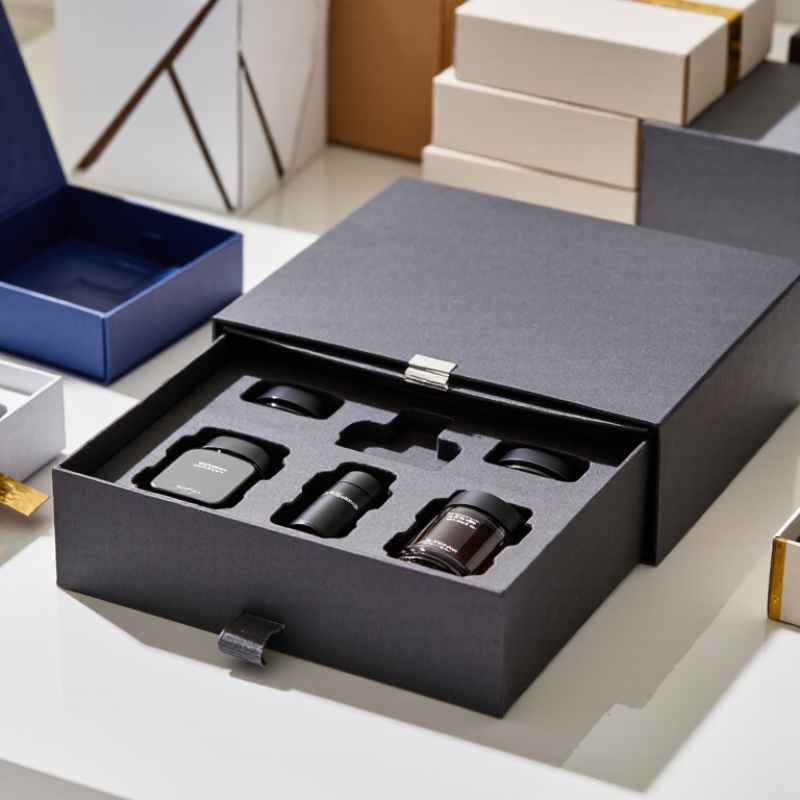
A reliable rigid box supplier provides more than attractive packaging. They control materials, production accuracy, and delivery performance. Global buyers should request physical samples before approving large orders. Check the board thickness, corner alignment, surface finish, and insert fit. Small defects become expensive when multiplied across thousands of boxes.
Experienced suppliers explain their process clearly. They should share material specifications, inspection standards, and realistic production timelines. Traceable quality records also matter. Ask how they handle color variation, adhesive failure, and damaged cartons. A capable supplier accepts reasonable questions. They do not hide behind vague promises. No supplier is flawless. Still, weak answers deserve careful review.
Tips: Compare samples under natural and artificial light. Confirm dimensions in millimeters. Request a written tolerance range. Review packaging for export protection, especially around corners. Discuss sampling, payment, shipping terms, and corrective actions before production starts. Keep approved samples for later comparison.
Sustainable material choices can strengthen long-term reliability. Ask whether paperboard sources are documented and whether coatings match your market requirements. A professional supplier will explain limitations instead of claiming perfection. That honesty is useful. However, buyers should verify important statements through records, inspections, and independent testing when needed. A polished sample alone proves very little.
Top 10 Rigid Box Suppliers for Global Buyers
Reliable rigid box suppliers usually begin with the board, not the decoration. Greyboard and chipboard provide strength, while coated paper, linen, or recycled fibers create the outer finish. Buyers should request thickness data, moisture resistance results, and paper origin records. Certified recycled content or responsibly sourced fiber can support responsible purchasing, but certificates require verification.
Manufacturing quality depends on controlled cutting, precise folding, and consistent wrapping tension. A good supplier should explain whether production uses automatic forming, hand assembly, or both. Handwork helps with complex corners, yet it can create variation between batches. Digital or offset printing affects color consistency, while embossing and foil stamping require careful pressure control. Small errors spread.
During supplier audits, inspect box squareness, lid fit, edge alignment, surface rubbing, and adhesive bleed. A sample should survive compression, vibration, and drop testing appropriate to its shipping route. ASTM distribution procedures can guide these tests, while ISO 9001 systems indicate documented process control. ISO 2859 sampling plans may support fair inspection decisions. Ask for batch records, pre-production samples, and corrective-action reports. No material is perfect. Recycled fibers may show slight shade variation, and magnetic closures can weaken after repeated use. Suppliers that disclose these limits often appear more dependable than those promising flawless results.
| No. | Supplier Profile | Typical Buyer Markets | Primary Rigid Box Materials | Common Manufacturing Methods | Surface Finishing Options | Typical Quality Standards | Typical MOQ | Indicative Production Lead Time | Best Suited Applications |
|---|---|---|---|---|---|---|---|---|---|
| 1 | High-volume folding-lid box supplier | North America, Europe, East Asia | 1200–1800 gsm paperboard 1.5–2.5 mm greyboard Coated art paper | Die-cutting, greyboard cutting, paper wrapping, corner forming, hot-melt or water-based gluing | Matte or gloss lamination, aqueous coating, foil stamping, embossing, debossing | ISO 9001 quality management; buyer-approved color standards; carton compression and drop checks where specified | 500–1,000 pieces | 20–35 working days after artwork and sample approval | Cosmetics, apparel accessories, consumer electronics, promotional gift sets |
| 2 | Luxury presentation box specialist | Western Europe, Middle East, North America | 1.8–3.0 mm greyboard Cotton or linen paper Recycled board | Precision board cutting, hand wrapping, rigid assembly, magnetic closure installation, manual inspection | Soft-touch coating, textile wrapping, edge painting, foil stamping, ribbon or fabric pull tabs | ISO 9001 or equivalent documented inspection; restricted-substance requirements; approved pre-production sample | 300–800 pieces | 25–45 working days after final approval | Jewelry, watches, premium spirits, luxury retail packaging |
| 3 | Magnetic closure box manufacturer | North America, Europe, Australia, Southeast Asia | 1.5–2.5 mm greyboard Solid-color wrapping paper Paper-based structural inserts | Automated board grooving, folding, magnetic fitting, wrapping, adhesive bonding | Matte lamination, spot UV, foil stamping, screen printing, textured paper application | Magnet polarity and retention checks; dimensional inspection; ISO 9001 commonly requested by international buyers | 500–1,000 pieces | 20–40 working days after approved sample | Subscription boxes, fashion accessories, premium electronics, corporate gifts |
| 4 | Eco-focused paper packaging supplier | European Union, United Kingdom, Canada, Japan | Recycled greyboard FSC-certified paper when specified Molded paper pulp | Board lamination, water-based gluing, pulp molding, paper insert forming, low-plastic assembly | Uncoated print, water-based coating, blind embossing, paper belly bands, recyclable paper wraps | FSC chain-of-custody documentation when applicable; ISO 14001 environmental management may be available; recycled-content verification | 1,000–3,000 pieces | 25–45 working days after artwork approval | Organic products, sustainable cosmetics, food gift sets, environmentally conscious retail packaging |
| 5 | Small-format premium box supplier | North America, Europe, South Korea, Australia | 1.2–2.0 mm greyboard Fine paper Microfiber or paper inserts | Precision die-cutting, wrapped-board construction, insert die-cutting, manual fitting | Foil stamping, micro-embossing, matte film, colored edges, flocked or paper inserts | Dimensional tolerance checks; print color approval; insert fit testing; supplier quality-control records | 300–1,000 pieces | 18–35 working days after sample approval | Jewelry, eyewear, small electronics, watches, compact luxury goods |
| 6 | Large-format rigid packaging supplier | North America, Europe, Latin America, Asia-Pacific | 2.0–3.5 mm greyboard Honeycomb paperboard Corrugated reinforcement | Large-panel cutting, reinforced board assembly, automatic wrapping, corner strengthening, compression testing | Printed paper wrap, lamination, water-based coating, reinforced fabric handles, protective edge finishing | ISO 9001; ASTM D4169 or ISTA testing may be specified for transport packaging; compression testing | 500–2,000 pieces | 25–50 working days after engineering approval | Home goods, footwear, apparel sets, oversized gift packaging, retail displays |
| 7 | Drawer-style box manufacturer | Europe, North America, Middle East, Southeast Asia | 1.5–2.5 mm greyboard Recycled paperboard Cotton ribbon or paper puller | Board grooving, drawer sleeve forming, wrapped-tray assembly, ribbon insertion, adhesive bonding | Soft-touch lamination, spot UV, embossing, foil stamping, textured paper, printed interiors | Drawer-cycle testing; dimensional inspection; adhesive bond checks; print and color approval procedures | 500–1,500 pieces | 20–40 working days after approved prototype | Tea, coffee, stationery, cosmetics, apparel accessories, curated gift collections |
| 8 | Book-style box and book-shaped packaging supplier | Europe, North America, Japan, Australia | 1.5–2.5 mm greyboard Textured book cloth Art paper | Board cutting, spine scoring, cloth or paper covering, tray insertion, magnetic or ribbon closure assembly | Book-cloth wrapping, foil stamping, debossing, screen printing, edge coloring, paper lining | Spine flexibility checks; hinge-cycle testing; dimensional tolerances; ISO 9001 commonly requested | 500–1,000 pieces | 25–45 working days after prototype confirmation | Books, collectibles, board games, premium stationery, cultural and archival products |
| 9 | Food and confectionery rigid box supplier | European Union, United Kingdom, North America, Gulf markets | Food-contact suitable paperboard 1.2–2.0 mm greyboard Paper or molded-pulp inserts | Rigid board forming, food-safe lining application, insert forming, die-cutting, controlled gluing | Food-contact compatible coating, foil stamping, embossing, aqueous varnish, paper-based interior lining | Applicable food-contact regulations; migration testing when required; hygiene controls; batch traceability | 1,000–5,000 pieces | 25–50 working days after compliance and artwork approval | Chocolate, confectionery, tea, coffee, bakery gifts, seasonal food collections |
| 10 | Custom insert and multi-component packaging supplier | Global e-commerce and retail markets | Greyboard EVA or paper foam alternatives Molded pulp Corrugated board | CAD-based structural design, CNC or die-cut prototyping, rigid box assembly, insert fitting, packing simulation | Printed wraps, matte or gloss lamination, foil stamping, embossing, protective coatings, custom interior colors | ISO 9001; ISTA 3A or ASTM D4169 testing may be used for shipped products; barcode and packing-list verification | 500–2,000 pieces | 30–55 working days for complex assemblies | Electronics, subscription kits, multi-piece product sets, e-commerce fulfillment packaging |
Supplier 1 specializes in premium paper wrapping and sharp edge finishing.
Supplier 2 focuses on magnetic closure boxes for retail presentation.
Supplier 3 handles high-volume production with automated cutting lines.
Supplier 4 offers custom inserts for bottles, devices, and fragile gifts.
Supplier 5 is experienced in textured papers, foil stamping, and embossing.
Supplier 6 develops lightweight boxes that reduce shipping volume.
Supplier 7 provides short-run sampling and faster design revisions.
Supplier 8 supports recyclable boards and water-based coating options.
Supplier 9 produces drawer-style boxes with smooth, tested movement.
Supplier 10 manages complex packaging programs across multiple factories.
Core capability matters more than attractive samples.
Ask each supplier for board thickness, paper specifications, color tolerances, and compression results. A reliable supplier should explain how corners are wrapped without visible gaps. They should also provide a physical sample before mass production. Check hinge strength, insert fit, and surface resistance during evaluation. Small defects often appear after transport, not inside a showroom.
No supplier is perfect.
One may offer excellent printing but weaker project communication. Another may provide strong engineering but limited material choices. I have found that clear approval documents prevent many disputes. Confirm artwork files, packing methods, production timelines, and inspection standards in writing. Request photographs from the production line when direct visits are impossible. A careful buyer should review both capability and consistency, not only the lowest quotation.
Top 10 Rigid Box Suppliers for Global Buyers
For global buyers, the top ten rigid box suppliers should be compared through one identical brief, not glossy samples alone. Request one prototype with matching dimensions, paper, insert, finish, and packing method. Customization may include magnetic lids, foil stamping, embossing, window cuts, and molded interiors. Ask whether each option uses standard tooling or requires new dies. Tooling can add cost and two weeks. A supplier may quote a low unit price but charge more for setup, sampling, or export cartons. Get every charge in writing.
Pricing changes sharply with quantity. A 500-box order may carry high sampling costs, while 5,000 boxes can improve material efficiency. Still, the cheapest quote may hide thinner board or weaker magnets. Request board thickness, paper weight, tolerance, and inspection photos. Minimum orders often range from several hundred to several thousand units. Lead times should cover artwork approval, sampling, production, and shipping. Sampling may take 7–15 days, while production often needs 20–45 days. Seasonal capacity can stretch both. Build a buffer. I have seen schedules fail because buyers approved color digitally, then rejected the physical sample. That mistake costs time. Digital proofing helps, but it is not perfect. Ask for a signed production sample and a clear replacement policy before paying the deposit.
Comparison of customization capability, minimum order quantities, indicative lead times, and relative pricing based on publicly stated supplier ranges and standard industry quotation practices. Supplier identities are anonymized.
| Supplier Profile | Customization Score | Typical MOQ | Lead Time | Price Index |
|---|---|---|---|---|
| Supplier Profile 1 | 94% | 500 units | 18 days | 112 |
| Supplier Profile 2 | 91% | 1,000 units | 21 days | 105 |
| Supplier Profile 3 | 89% | 1,000 units | 24 days | 98 |
| Supplier Profile 4 | 86% | 2,000 units | 26 days | 94 |
| Supplier Profile 5 | 84% | 2,000 units | 28 days | 90 |
| Supplier Profile 6 | 81% | 3,000 units | 30 days | 86 |
| Supplier Profile 7 | 79% | 3,000 units | 32 days | 82 |
| Supplier Profile 8 | 76% | 5,000 units | 34 days | 78 |
| Supplier Profile 9 | 73% | 5,000 units | 36 days | 74 |
| Supplier Profile 10 | 70% | 10,000 units | 40 days | 69 |
How to read the chart: Higher customization scores indicate broader options for materials, structures, finishes, inserts, and artwork. The price index uses 100 as the market median; lower values indicate a more price-oriented quotation.
Choosing among the top 10 rigid box suppliers requires more than comparing attractive websites. Global buyers should verify production evidence, not promises. Request recent factory photographs, equipment details, material specifications, and a clear quality-control process. A video tour helps, but an independent factory audit provides stronger evidence.
Ask for a physical sample before approving mass production. Check the board thickness, corner alignment, surface finish, magnet strength, and lid movement. Measure several points, because one perfect sample proves little. Request test records for color consistency, compression, odor, and packaging durability. Confirm whether the supplier can repeat these results at scale.
Communication reveals operational maturity. The supplier should explain lead times, minimum order quantities, inspection stages, and corrective actions in writing. Contact two recent customers, if possible, and ask about delayed shipments or rejected goods. Silence matters. It may signal weak control.
Compare quotations carefully. A low price can hide thinner board, weaker adhesives, or inadequate protective packaging. Review payment terms, production milestones, approved samples, and replacement responsibilities in the contract. Check relevant import, labeling, environmental, and safety requirements for the destination market. Requirements vary by country.
I have seen buyers focus too heavily on finishing details. That was a mistake. A beautiful box with unstable dimensions still creates costly problems. Leave room for a pilot order, independent inspection, and honest reassessment before committing to long-term production.