What Are the Best Paperboard Cartons for 2026?
In 2026, choosing paperboard cartons means balancing protection, shelf appeal, production needs, and material use. The strongest option is not always the thickest or most elaborate. It is the one that suits the product, filling line, transport route, and customer experience.
Packaging scientist Dr. Gordon L. Robertson has written extensively about packaging’s role in protecting products. The following is a paraphrase of that practical principle, not a verbatim quotation: “A good package protects the product while using only the material the job requires.” That idea gives this guide a useful starting point. Still, it does not settle every choice. A carton that works well for dry goods may fail around moisture, sharp corners, or repeated handling.
We will compare carton styles, board grades, coatings, print finishes, and structural features. Picture a carton standing on a crowded shelf, its folds holding firm and its label easy to read. Small details matter. A weak crease can spoil an otherwise polished design. So can a finish that complicates recycling in a local system.
There is no universal winner. The right paperboard cartons depend on product weight, barrier needs, shipping conditions, order volume, and budget. Some priorities also conflict; better protection may require more material. This guide weighs those trade-offs and identifies options worth testing before a large production run.
What Paperboard Cartons Are and How They Work
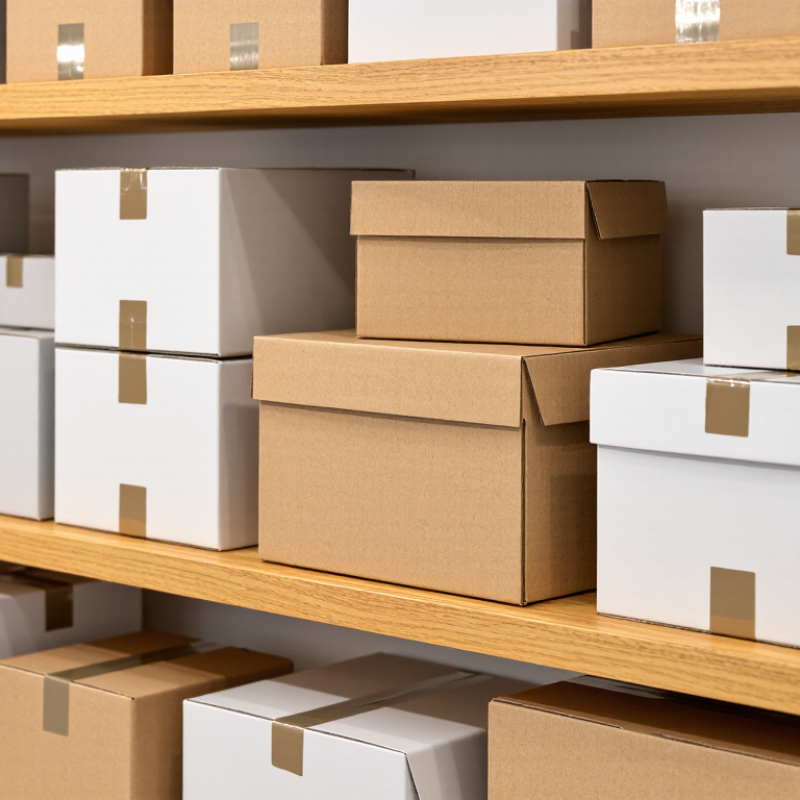
Paperboard cartons are lightweight packages made from thick, layered paper fiber. Folding cartons arrive flat, then take shape through scored folds and glued seams. A carton’s panels provide structure, while tabs, locks, or adhesive hold it closed. Simple, but precise.
During production, converters print and cut the board, then create crease lines that guide folding without tearing the surface. At the packing line, cartons are erected, filled, and sealed. Board thickness and design affect stacking strength, product protection, and how easily a carton runs through machinery. Moisture remains a weakness: damp fibers can soften, and coatings may complicate recycling. Still, a tidy package drawing cannot show every real-world handling problem.
Paperboard is not one uniform material. Cartons can use different fiber mixes, coatings, and barrier layers, selected for the product and its journey.
The Confederation of European Paper Industries reported a 79.3% paper-and-board recycling rate in Europe in its 2023 Key Statistics report.
That figure covers paper and board broadly, not every carton or local collection system. Design choices matter. A carton with separable components and limited mixed materials may fit recycling streams more easily, but local facilities determine what is actually accepted.
Key Criteria for Evaluating Cartons in 2026
In 2026, a good paperboard carton should fit its product closely without making packing awkward. Check the internal dimensions against the actual item, including inserts and protective wrapping. A few millimeters can matter. Loose space may let products shift, while a tight fit can slow packing or damage corners. Ask suppliers for samples and test them on the line, not only on a desk.
Protection deserves practical testing. Stack filled cartons, handle them as they would be during shipping, and inspect the folds and corners for crushing. If products face humidity or refrigeration, test the board under those conditions too. A carton that looks sturdy in a dry room may behave differently in transit. Print quality matters, but legible instructions and scannable codes should come before decorative effects.
Material and cost claims need context. Ask what the board contains, whether coatings or laminations affect local recycling options, and how consistently specifications can be supplied. Compare total costs, including storage, freight, and packing time, rather than unit price alone. No scorecard is perfect. A small production trial can reveal problems that a specification sheet misses, though it may not represent every season or shipping route. Keep notes on test conditions so comparisons stay useful.
Common Paperboard Carton Types and Their Uses
Paperboard cartons work best when their structure matches the product.
Folding cartons are lightweight and ship flat, making them practical for tea, cereal, cosmetics, and small household goods. A tuck-end carton suits a shelf-ready pack; an insert can stop a glass bottle from shifting. Rigid setup boxes feel sturdier and often suit gifts or premium items, but take more storage space. Gable-top cartons pour easily and are common for chilled drinks. Aseptic cartons use layered materials to protect shelf-stable beverages. That barrier can make recycling more complicated.
The U.S. EPA’s 2018 Advancing Sustainable Materials Management report estimated a 68.2% recycling rate for paper and paperboard overall. That figure is not specific to cartons. Local collection rules and carton construction matter. A carton with a plastic window, foil lining, or heavy coating may be handled differently from an uncoated folding carton. For 2026, check the product’s filling line, shipping conditions, and disposal route before choosing a style. A beautiful carton that dents in transit is still a poor choice.
Tips: Test a filled carton, not just a flat sample. Check closure strength, moisture resistance, and print scuffing. Ask the local recycler about acceptance. One detail is easy to miss: thicker board can improve stiffness, yet add weight and cost. Decide which trade-off matters most.
How Materials and Designs Affect Carton Performance
The strongest carton is not always the thickest. For 2026, performance depends on matching paperboard grade, caliper, and structure to the product and shipping route. A dry cosmetic box may need crisp folds and clean printing. A chilled-food carton faces moisture, softening, and seal challenges. Grain direction matters, too: score lines that cross the grain can crack, especially on tight folds. Small details show up fast.
The American Forest & Paper Association reported a 68% U.S. paper recycling rate in 2022. It also reported a 93.6% recovery rate for corrugated containers that year. These figures describe paper and corrugated packaging, not folding cartons alone. Still, they underline why coatings, windows, and mixed materials deserve scrutiny. One caution: recycled content alone does not predict carton strength. Fiber quality, board stiffness, humidity, and pack design all matter. Test samples under realistic conditions, including compression, vibration, and moisture exposure. A carton that survives a showroom test may buckle in a damp delivery van. That gap is easy to miss.
What Are the Best Paperboard Cartons for 2026?
How materials and designs affect carton performance
Typical basis-weight ranges vary by mill, grade, and intended use. Higher basis weight alone does not guarantee better carton performance: stiffness, protection, print quality, and recyclability also depend on board construction, coatings, carton geometry, and converting choices.
Choosing a Carton for Specific Products and Requirements
Choosing a paperboard carton starts with the product’s weight, shape, and journey. Dry goods such as tea or cosmetics often suit folding cartons: they print cleanly and use little storage space before filling. For glass jars or heavier items, specify a stronger board grade and test the carton under stacking pressure. A neat shelf sample can still buckle after a damp delivery.
Moisture changes the choice. Frozen foods and chilled products may need a barrier coating, while electronics usually need fitted inserts to limit movement and scuffing. Check the full pack, not just the outer carton: coatings, windows, adhesives, and inserts can affect sorting and recycling. The American Forest & Paper Association’s 2023 report puts U.S. paper recycling at 65–69 percent. The European Paper Recycling Council reported a 75 percent paper recycling rate in Europe for 2023. These figures describe paper overall, not every carton.
Ask converters for samples made with the intended board, finish, and print coverage. Test them on the actual filling line and in realistic storage conditions. Small details matter: a tight tuck flap, a sharp crease, or a glossy coating can change performance. Some choices involve a trade-off. A barrier may protect the product, yet complicate recycling; the right answer depends on product sensitivity and local collection systems.